Can You Declutter Too Much? (The Fear of Regret)
In this post: Can you declutter too much? Short answer? Yes … but there is a way to mitigate that risk and the emotional fallout. Here’s how.
So, you want to reduce clutter in your home. You’re ready to start sorting. You even have a spot in mind to begin. But something is holding you back; you’re getting stuck making the decisions because what if you end up regretting letting go of something. Can you declutter too much?

My short answer? Yes. But … most people probably aren’t in danger of it.
In fact, my personal threshold for “too much decluttering” would probably cause my depression-era grandmothers to clutch their (faux) pearls. I can hear them now. “What if you need it later?”
For instance, I recently sold a bunch of glue sticks at a yard sale. My son is now in middle school and I (wrongly) assumed we were past our gluing in class days. Then I got the 7th grade supply list and wouldn’t you know it, glue sticks were still there. Oops.
However, my grandmothers wouldn’t be wrong that it is a good idea to be prepared. The distinction comes when your preparedness interferes with daily life, or when you can, realistically, afford to replace items if needed, thereby outsourcing the storage of said items to store shelves, and not your own closet.
There is a difference between hoarding toilet paper and holding onto a specialized gardening tool you sometimes use that you couldn’t find at Lowe’s if necessary.
(2020 was the only time in recent history when toilet paper hoarders had an advantage over most people. Unless you have a bunker, don’t crowd your limited storage space in preparation for unprecedented events. Just saying.)
While “what if I need it later?” is a legitimate concern, it is not a reason to keep every little thing. Discernment is required.
How do you decide what deserves space in your home?
Great. So, how do you choose?
Excellent question.
Imagine you are packing for a trip. Your airline charges per checked bag, and limits your carried-on bags. You decide you don’t want to pay for any additional baggage, so it’s very important you pack as carefully as possible.
In order to be efficient, you need to know the following:
- How long will you be on the trip?
- What is the climate of your destination?
- What will you be doing while there?
- Will there be any cultural nuances you need to plan for?
- Is there likely to be the kind of stores nearby where you could find anything you forgot?
- In a pinch, could you make do with an alternative item?
How you answer any of those questions will make a difference in what you choose to bring with you. As will the dimensions of your luggage. Once it is full, it’s full. You can only cram so much.
So anything you bring needs to have a very good reason for being there. Or you need to suck it up and pay baggage fees to bring the just-in-cases.
It’s the same with your home.
Decluttering is subjective
Unless you are willing to pay monthly for additional storage, you have actual physical limitations to your storage capacity. Even more than that, if ease of access is important to you, your available space will shrink even more, because it will become important not to overstuff any one drawer, cupboard, closet, or shelf.
Is it worth using valuable real estate for this item in question? Or is it replaceable, if needed? Furthermore, is the risk of needing it in the future greater than the need to make room for you to live well in your home now?
Only you can answer those questions.
Your answer will be based on how replacement impacts you personally. It’s not just about the money. It might be about the memory. Or the rarity of the item. Or the person who gave it to you. This becomes especially important when evaluating sentimental items.
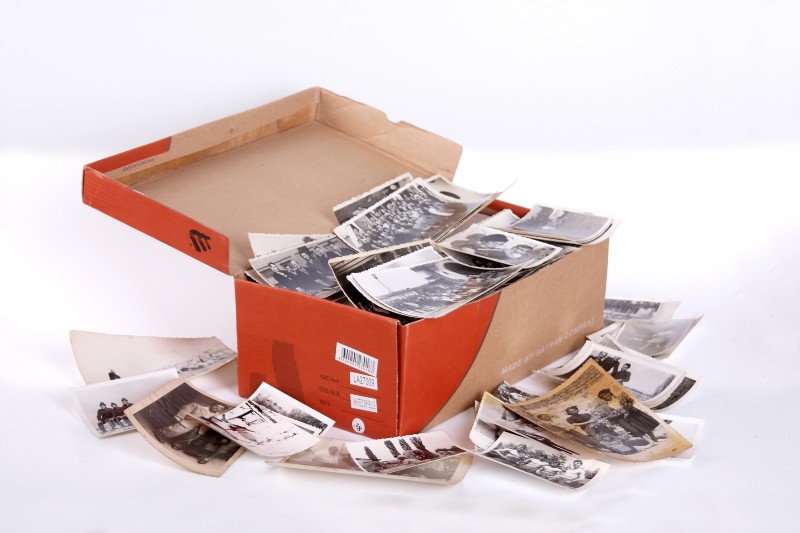
An item’s worth is not just about value
Something can be essentially worthless, like a McDonald’s Happy Meal toy that never became a collectible, but mean the world to somebody who was given it by their late grandmother just before she passed. In that case, it wouldn’t matter if they changed their minds about letting go of it after the fact and hunted down an identical one on eBay, they’d never be able to replace that specific toy from that specific meal they’d enjoyed with their grandmother.
That’s why I try to never make assumptions when working with my clients, because what I could see as trash could be irreplaceable to someone else. Even if we’re low on available space, if we have to play Tetris to make something fit, so be it.
And no, you won’t always get it right.
Regret happens (don’t let it stop you)
I’m not gonna lie. Sometimes you really do regret decluttering things. Sometimes you’ll think, “Crap. I needed that.” Sometimes you waste time looking for it when it’s not there anymore. Sometimes your circumstances change and what you didn’t have room for before, you have room for now. Sometimes the picture you took of the item doesn’t fully capture the memory like they said it would.
That doesn’t mean you failed and it also doesn’t mean the act of decluttering was a mistake. It just makes you a human being with feelings and incomplete knowledge when you made a decision.
Ask yourself the right questions to make easier decisions
If you need help deciding what to keep and what to let go of, it can be useful to use a framework for that decision-making. I’ve got a premade one you can download here, but as many of these decisions are personal in nature, it might need more nuance than a simple chart can provide. In that case, make a list of your own questions to ask yourself.
Here are some examples to get you started:
- Am I responsible for the decision to keep or remove this item? (only make decisions about things that are yours. Consent is key.)
- How likely am I to actually use this again?
- What would replacing it cost me? (Include emotional cost in this equation)
- How difficult would it be to find again at a later date?
- How much space does this take up in my home while I’m waiting for “someday”?
- What’s the consequence if I guess wrong?
Fortunately, very little is truly irreplaceable. Most decluttering decisions are fairly low stakes. So give yourself grace if you are frustrated by a decision you made in the past, and give yourself permission to change your mind in the future.
Don’t let what ifs hold you back.
Like what you’ve read? Share it!

Meet Andrea
Decluttering for sixteen years and counting! Andrea is a professional organizer in the Nashville, TN area, author of Room to Live, wife, mother, and dark chocolate sea salt caramel enthusiast.